


Threaded Hex Bolts Explained: Sizes, Grades & Thread Standards
 2026.06.22
 Alan uutisia
A threaded hex bolt is identified by three independent specifications that must all match for a correct fit: diameter and length, thread standard (metric or imperial, coarse or fine), and strength grade. Getting any one of these wrong is the most common cause of bolt failure or assembly mismatch — a bolt can look identical on a shelf and still be structurally or dimensionally incompatible with your application.
Below, we break down how hex bolt sizing works, what strength grades actually mean, the difference between thread standards, and how to read the markings stamped on the bolt head.
Anatomy of a Threaded Hex Bolt
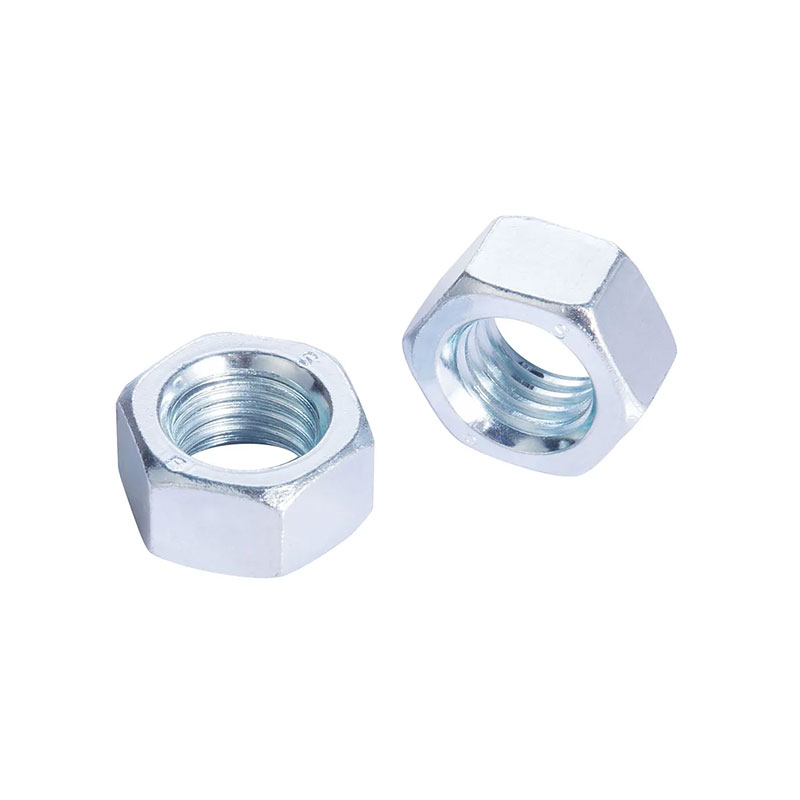
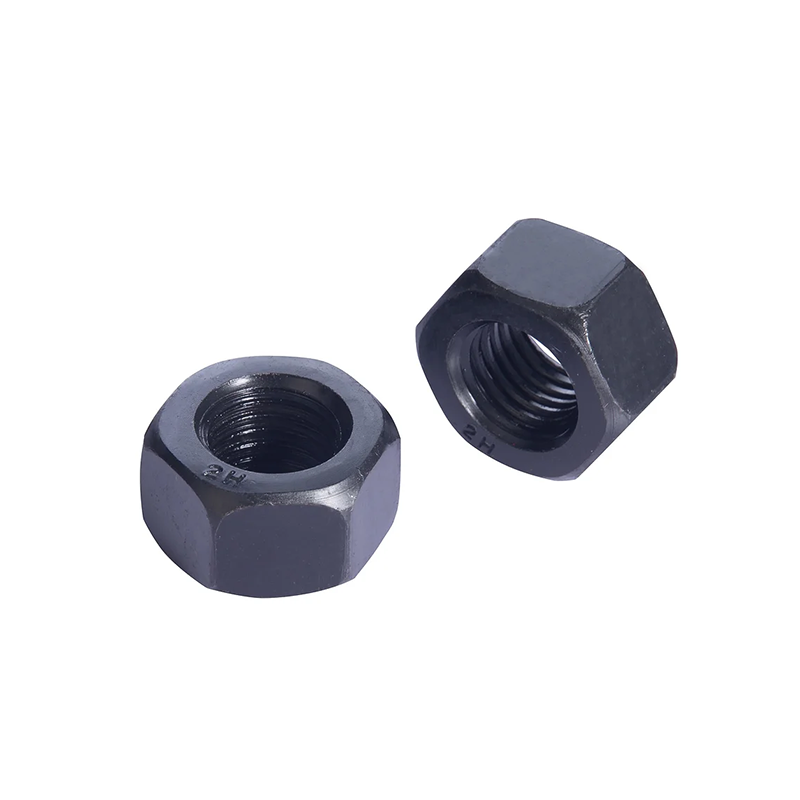
A hex bolt consists of a six-sided head (designed for wrench or socket tightening), a shank, and a threaded section that may run partially or fully along the shank's length. Bolts with partial threading are typically used where the unthreaded shank needs to bear shear load across a joint, while fully threaded bolts are used where maximum thread engagement is needed throughout the connection.
The three numbers that define a bolt — diameter, thread pitch, and length — are always specified together. A bolt labeled "M10 x 1.5 x 40mm," for example, has a 10mm diameter, 1.5mm thread pitch, and 40mm length.
Metric vs. Imperial Sizing
Hex bolts follow one of two sizing systems, and mixing them is a frequent source of cross-threading or loose fits. Metric bolts are sized by diameter in millimeters; imperial bolts are sized by diameter in fractions of an inch.
| Metric Size | Closest Imperial Equivalent | Common Coarse Pitch |
|---|---|---|
| M6 | 1/4" | 1.0mm |
| M8 | 5/16" | 1.25mm |
| M10 | 3/8" | 1.5mm |
| M12 | 1/2" | 1.75mm |
| M16 | 5/8" | 2.0mm |
Metric and imperial bolts are never truly interchangeable — even close matches differ enough in diameter and thread pitch to cause stripped threads under load. Always match the bolt system to the nut, tapped hole, or fitting it pairs with.
Thread Standards: Coarse, Fine, UNC & UNF
Metric Coarse vs. Metric Fine
Coarse threads have a larger thread pitch and are the default for most general applications because they're faster to install and more resistant to cross-threading. Fine threads have a smaller pitch, offering greater clamping force and vibration resistance, which makes them common in automotive and precision machinery applications.
UNC vs. UNF (Imperial Standard)
In the imperial system, UNC (Unified National Coarse) is the general-purpose standard, while UNF (Unified National Fine) offers tighter thread engagement for applications subject to vibration or repeated loosening and tightening, such as engine components.
Strength Grades and What the Markings Mean
Bolt strength is stamped directly on the head, using numbers for metric bolts and radial lines for imperial (SAE) bolts. Using a bolt with insufficient grade for the load it carries is one of the most serious — and most preventable — failure causes in mechanical assembly.
| Marking | Standard | Approx. Tensile Strength | Typical Use |
|---|---|---|---|
| 4.8 | Metric | 420 MPa | Light-duty general fastening |
| 8.8 | Metric | 830 MPa | Structural, automotive, machinery |
| 10.9 | Metric | 1040 MPa | High-stress structural and engine applications |
| Grade 5 | SAE (Imperial) | ~830 MPa (120 ksi) | General automotive and machinery |
| Grade 8 | SAE (Imperial) | ~1035 MPa (150 ksi) | High-stress structural and load-bearing applications |
For metric bolts, the marking format is read directly: the first number (×100) indicates tensile strength in MPa, and the second number indicates the yield-to-tensile ratio — an 8.8 bolt has a tensile strength of roughly 800 MPa and a yield strength about 80% of that figure.
Material and Coating Options
- Carbon steel (zinc-plated): The most common and cost-effective option, suitable for general indoor or low-corrosion applications.
- Stainless steel (304 or 316 grade): Offers strong corrosion resistance, with 316 grade preferred for marine or chemical exposure environments.
- Alloy steel: Used for high-strength grades like 10.9 or Grade 8, often heat-treated for additional durability under stress.
- Hot-dip galvanized: A thicker zinc coating than standard plating, suited for outdoor or high-moisture structural applications.
How to Choose the Right Bolt for Your Application
- Confirm whether your assembly uses metric or imperial threading before ordering — check the mating nut or tapped hole, not just the bolt itself.
- Match the strength grade to the load and safety factor required by your application's engineering specification, not just what's commonly stocked.
- Choose fine threads for vibration-prone assemblies and coarse threads for general-purpose or faster installation needs.
- Select corrosion-resistant materials or coatings for any outdoor, marine, or chemical-exposure environment.
Common Mistakes to Avoid
- Mixing metric and imperial bolts based on a "close enough" diameter match.
- Selecting a bolt by size alone without verifying the strength grade meets load requirements.
- Using standard zinc-plated bolts in outdoor or marine environments where corrosion-resistant materials are needed.
- Over-tightening high-grade bolts beyond their specified torque rating, which can cause thread stripping or bolt failure.
 Ota yhteyttä
Konseptista tuotantoon voimme luoda haluamasi tuotteet.
 Tuotteet
- · RUUVIT
- · KUUSIKULMAISET PÄHTERIT
- · KIERTEETTY PULTIT
- · LAAJENTAMINEN ANKKURIT & TULPPAT
- · WIRE RUUVIKOUKUT
- · RUUVIEN ALUSPIMET
Yhteystiedot Tel: 86-574-62101087
 E-mail: [email protected]
- Sähköposti: [email protected]
 Add: Xiaocao 'e Binhai Industrial Park, Yuyao, Zhejiang, Kiina
Copyright 2024 Yuyao Cili Machinery Co., Ltd. All Rights Reserved.
